Introduction:
Magnetic Field and Magnetic Force are very important topics in Physics. These are the basic principles with the help of which we understand the working of electricity, motor, generator, transformer, speaker, mobile, fan and many other electrical devices. If a student is studying electrical technology, physics or engineering, then it is very important for him to understand magnetic field and force. This topic is not only limited to books but is used everywhere in our daily life.
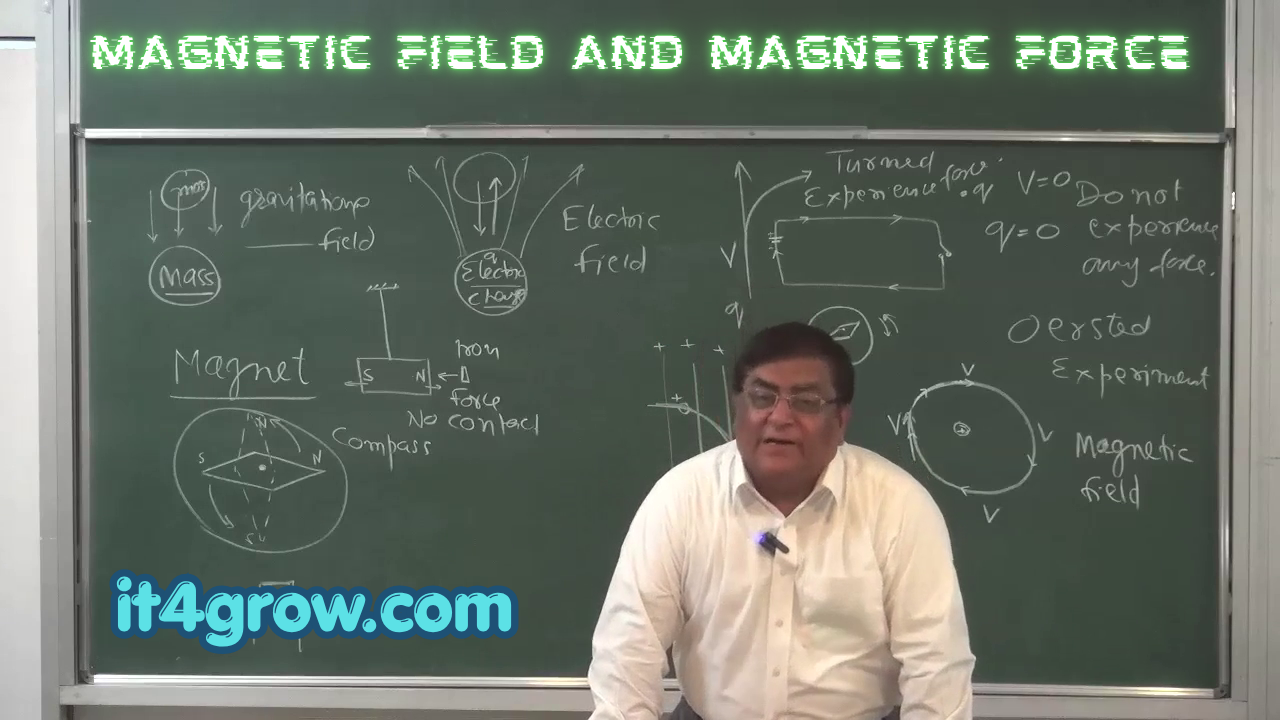
When we take a magnet close to a piece of iron, it attracts it towards itself. This attractive force is called magnetic force and the area to which this force acts is called magnetic field. That is, there is an area around every magnet where it acts. This affected area is called Magnetic Field.
After understanding the magnetic field and force, we can easily understand how electricity is generated, how a motor rotates, and how a generator works. That is why this topic is included in the basic chapters of physics.
What is a magnetic field
A magnetic field is the area around a magnet or electric current and in which the magnetic force acts. If a magnet is placed on a table and iron filings are placed around it, they will arrange themselves in a certain shape. This arrangement shows that there is a field around the magnet, which we call the magnetic field.
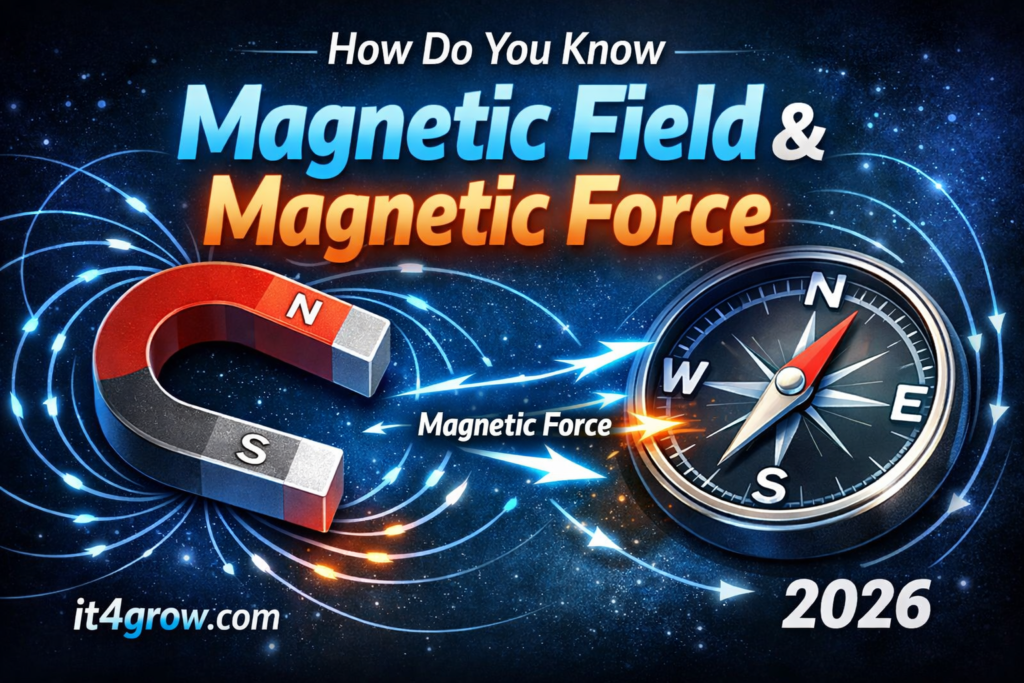
Every magnet has two ends, called the North Pole and the South Pole. The magnetic field lines always emerge from the north end and enter the south end. These lines tell us what the direction of the field is and in which direction the force is acting.
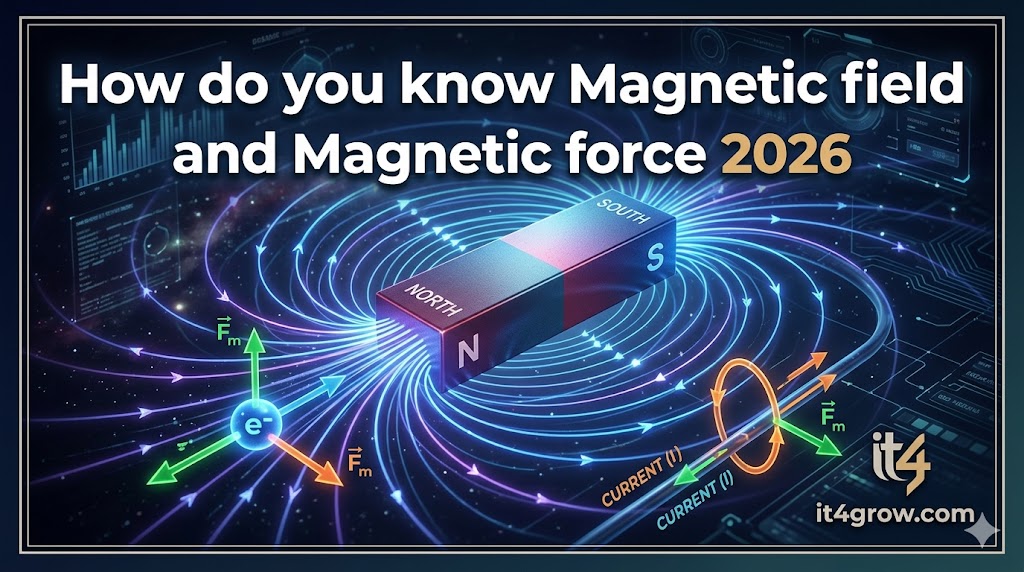
The magnetic field is not only around the magnet, but when a current passes through a wire, a magnetic field is also created around it. This principle is later used in motors and generators.
What is magnetic force
Magnetic force is the force that is created due to a magnet or magnetic field. When two magnets are brought close to each other, they either attract or repel each other. If different poles come close, attraction occurs and if the same poles come close, repulsion occurs.
Different rules are used to find the direction of magnetic force, such as Right Hand Rule and Fleming Rule, which tell us in which direction the force will be exerted.
Types of Magnets
There are different types of magnets. Some magnets are natural and some are man-made. Natural magnets are called Natural Magnet while man-made magnets are called Artificial Magnet.
Artificial magnets include bar magnets, horseshoe magnets and electromagnets. An electromagnet is a magnet that is created with the help of electricity. When current passes through a coil, a magnetic field is created around it and it starts working like a magnet.
The advantage of an electromagnet is that it can be turned on or off whenever you want. This is why it is used in motors, relays, bells and cranes etc.
Magnetic field lines
To understand the magnetic field, we use the concept of field lines. These lines are not actually visible but they are estimated with the help of experiment.
These lines always leave the North Pole and enter the South Pole. Where the lines are closer together, the field is stronger, and where the lines are farther apart, the field is weaker.
Magnetic field lines never intersect. This principle is always true and is considered very important in physics.
Relationship between current and magnetic field
When an electric current passes through a wire, a magnetic field is created around it. This was first discovered by the scientist Oersted. He saw that when a current passes through the wire, the needle of a compass kept nearby moves.
This meant that a magnetic field is created due to the current. Later, motors, generators, and transformers were made using this principle.
If the wire is wrapped in the form of a coil, the magnetic field becomes even stronger. That is why coils are used more.
Use of magnetic force
The use of magnetic force is very common in our daily lives. Electric motors, generators, transformers, speakers, microphones, mobile chargers and induction cookers all work on this principle.
In a power station, a turbine is rotated, the turbine rotates the generator, the coil in the generator rotates in a magnetic field and electricity is generated. All this is possible because of the magnetic field and force.
Railways, factories, homes, schools, hospitals, magnetic principles are being used everywhere.
Conclusion
Magnetic Field and Magnetic Force are the basic principles of physics that tell us how magnets work and how electricity is generated. If we understand these principles well, it becomes easy for us to understand the working of electric motors, generators and transformers. These principles are the basis of modern technology and that is why it is very important for every student to learn them.
10 important questions asking every times anywhere in the world:
- What is a magnetic field and how is it created?
- What is the difference between a magnetic field and a magnetic force?
- How does a moving charge experience a magnetic force?
- What is the Lorentz force law and why is it important?
- How do magnetic field lines represent the strength and direction of a magnetic field?
- Why does the Earth have a magnetic field, and how does it affect a compass?
- How does distance from a magnet affect the strength of a magnetic field?
- What are some real-world uses of magnetic force in technology?
- How can you see magnetic fields using metal filings or iron powder?
- Why is the angle between velocity and magnetic field important in calculating magnetic force?