Introduction:
A transformer is a very important machine in the power system. It is used to increase or decrease the voltage of electricity so that electricity can be delivered safely and efficiently to homes, offices and factories. There are many important things inside a transformer, but the most important thing is transformer oil.
Transformer oil not only provides cooling but also keeps the insulation strong between the windings. If this oil gets damaged or gets water or moisture in it, the risk of transformer failure increases. In this article, we will learn in detail what effects of bad oil and moisture** can be and how to prevent them.
1. Importance of Oil:
Transformer oil has several important functions:
- Cooling: Heat is generated by the current flowing inside the transformer, and the oil absorbs this heat and protects the transformer from heating.
- Insulation: The oil also acts as insulation between the windings, so that the current passes through the correct path and there is no short circuit.
- Fault detection: Some chemical properties of the oil can indicate the presence of a fault.
If the oil deteriorates or moisture is added, it cannot do all its work effectively, and electrical faults are created inside the transformer.
2. Effects of bad oil:
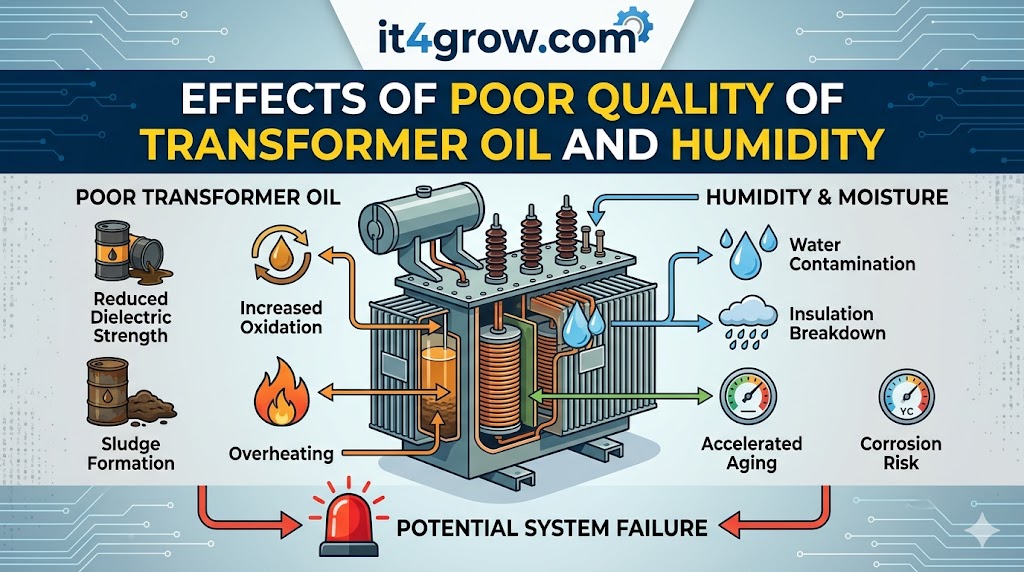
(a) Increase in temperature
The first and most obvious sign of bad oil is that the transformer starts to overheat. Bad oil cannot absorb heat, due to which windings and insulation are affected. If this situation continues for a long time, the transformer may even burn out completely.
(b) Weakness of insulation
If the oil is old, contaminated or moist, the insulation strength decreases. This increases the risk of short circuit. Transformer faults often start for this reason, when the internal winding is not properly protected.
(c) Risk of sparks and faults
Bad oil can produce sparks, which damage the internal parts of the transformer. Even this small spark can turn into major damage, and sometimes the entire transformer burns out.
(d) Reduction in life
The life of a transformer mainly depends on the quality of the oil and the condition of the insulation. Bad oil reduces the continuous performance of the transformer and reduces its life much less than normal.
3. Effects of Humidity:
Moisture is also very harmful to the transformer. It often enters from the external environment or due to poor sealing.
(a) Effect on insulation
Moisture reduces the strength of the insulation, which increases the risk of short circuits.
(b) Weakness of oil
If water is added to the oil, it affects the cooling and insulation properties of the oil. The presence of water increases the possibility of sparking.
(c) Rust and metal deterioration
Moisture also affects the metal inside the transformer. The windings and connections start to rust, which reduces the efficiency of the transformer.
(d) Fault and electrical hazard:
Small faults occur frequently due to moisture, and if the protection system is weak, these turn into major losses.
4. Ways to prevent bad oil and moisture:
- Regularly test the oil: Conduct regular tests to detect moisture, contamination or chemical changes in the transformer oil.
- Proper sealing: The seals on the top and connections of the transformer should be correct and strong so that moisture does not enter.
- Use quality oil: Always use quality oil from a good company, and change the old oil in time.
- Check the cooling system: Regularly check the fan, radiator and oil temperature.
- Take care of weather conditions: Take additional protective measures in areas with high humidity, such as a dehumidifier or additional cooling system.
Conclusion:
Transformer oil and moisture are both very important for the performance and life of the transformer. Bad or moist oil not only causes faults but also reduces the life of the transformer. If timely maintenance, oil tests and protective measures are taken, the transformer can work without problems for many years.
FAQs (Frequently Asked Questions):
Question 1: What is the main function of transformer oil?
Answer: The function of transformer oil is to provide cooling, maintain strong insulation between windings and reduce the possibility of faults. This oil is very important for the life of the transformer.
Question 2: What are the effects of bad oil?
Answer: Bad oil causes the transformer to overheat, weaken the insulation, sparks and faults can occur and the life of the transformer is reduced.
Question 3: How does moisture affect the transformer?
Answer: Moisture weakens the insulation, deteriorates the properties of the oil, causes rust on the metal and can cause small faults.
Question 4: How does water or moisture get into the oil?
Answer: It mostly enters from the external environment, such as poor sealing, leakage or installation in a humid area.
Question 5: How to recognize bad oil?
Answer: Regular oil tests can detect moisture, contamination, discoloration or chemical weakness in it.
Question 6: How to protect a transformer in a high humidity area?
Answer: Use additional safety measures such as dehumidifiers, strong sealing and quality oil to prevent moisture from entering.
Question 7: Is old oil always bad?
Answer: No, old oil can be used after proper maintenance and testing, but if water or contamination gets into it, it must be replaced immediately.
Question 8: What are the risks of faults caused by bad oil or moisture?
Answer: A fault can result in transformer burnout, winding damage and large-scale outages in the power system.
Question 9: What is the best way to reduce the effects of oil and moisture?
Answer: Regular oil tests, checking of the cooling system, use of quality oil and proper sealing.
Question 10: How much does bad oil and moisture affect the lifespan of a transformer?
Answer: Bad oil and moisture significantly reduce the lifespan of a transformer. With proper maintenance and oil changes, this lifespan can usually be extended to 25-30 years.