Savings vs. Investing – Why It Matters in life 2026:
Are you putting money aside for your future and wondering whether to save or invest? Many people face the same question, and the difference is more important than you think. Savings and investing are both essential parts of managing your money, but they serve very different purposes. Understanding the difference helps you make better choices, avoid costly mistakes, and set realistic goals for your financial future.
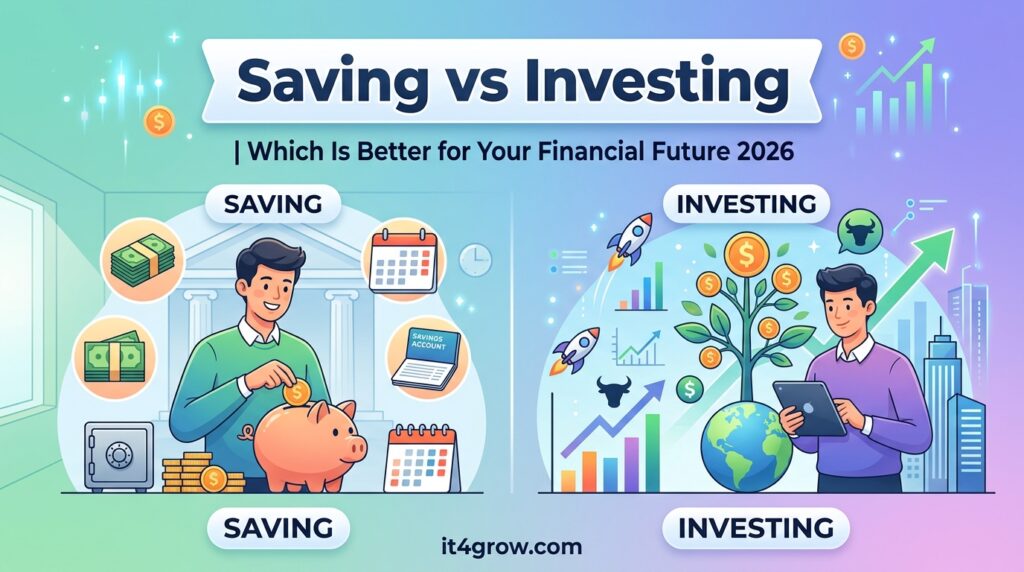
When you save, you prioritize safety and access. When you invest, you take calculated risks with the goal of growing your money over time. Both strategies have benefits, and knowing how to combine them effectively is key to long-term financial success.
What is saving 2026?
Saving is the process of setting aside money for short-term use or emergencies. This means keeping your money safe, often in a savings account, where it’s accessible and secure. The primary goal of saving is security, not high growth.
The Goal of Saving 2026
Saving is like building a safety net. It ensures that you have funds available for emergencies, unexpected expenses, or short-term goals, such as a vacation, a new gadget, or a minor home repair. Money in savings is low-risk, providing peace of mind and quick access when needed.
How Savings Accounts Work 2026
Money in a savings account typically earns interest at a low rate. It’s a predictable and safe way to keep your funds growing slowly. While growth may be modest, the principal is safe, making savings an ideal choice for short-term goals and emergency funds.
Benefits of Savings 2026
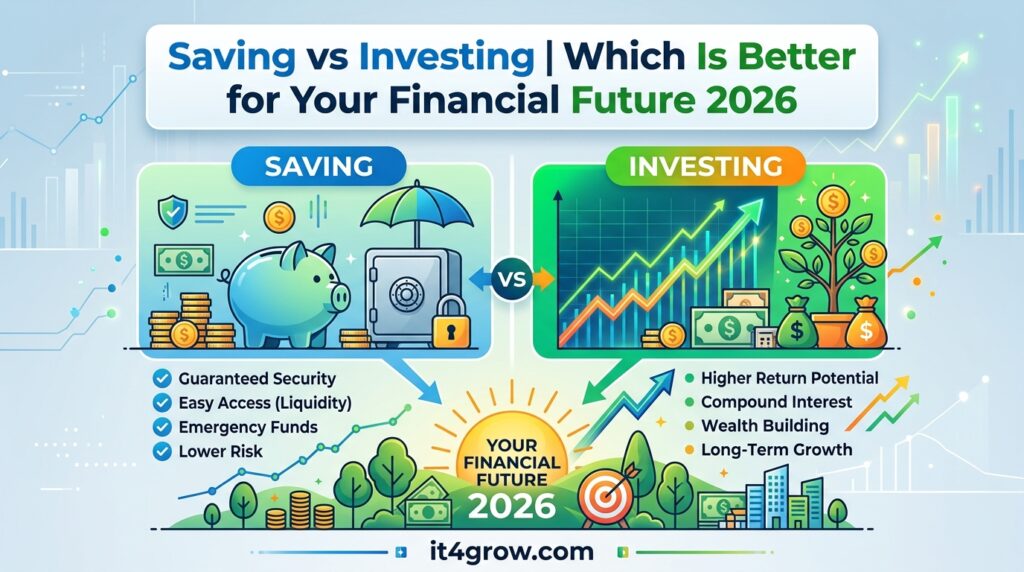
- Low Risk – Your principal is safe.
- Easy Access – Funds are usually available at any time.
- Emergency Prepared – Best for unexpected expenses.
However, the pace of trade is slow, which may not keep pace with inflation over time.
What is investing 2026 ?
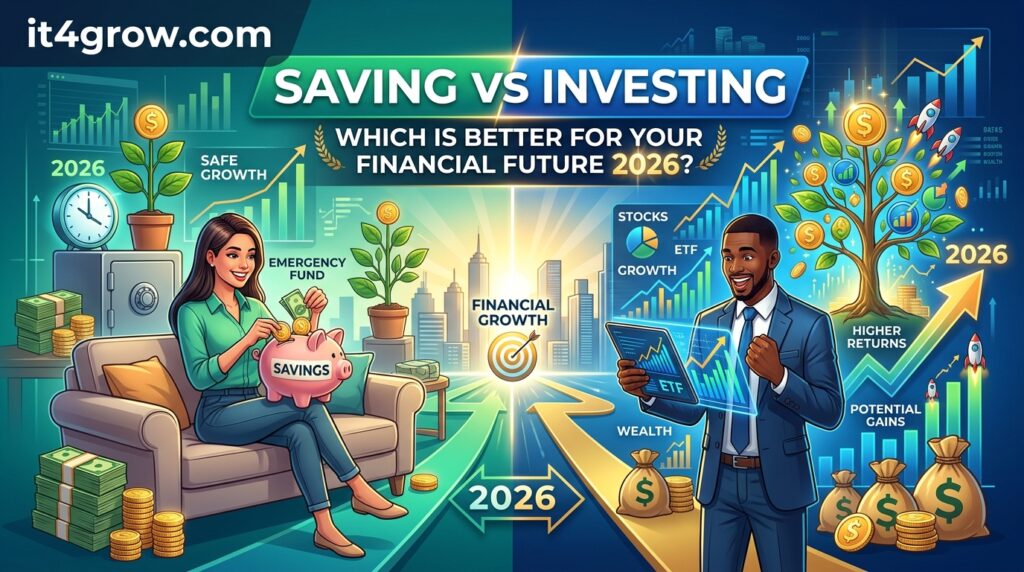
Investing involves putting money into assets like stocks, bonds, mutual funds, or ETFs with the expectation of generating growth over time. Unlike savings, investing involves higher risk, but it also offers the potential for higher returns.
Investment Objective 2026:
Investing is about long-term growth. It helps you achieve goals that require more significant capital, such as buying a home, funding an education, or preparing for retirement. Investments are not for quick access. Their power comes from compounding over years or decades.
Combined Investment Vehicles 2026:
- Stocks – Ownership in companies that can fluctuate in value.
- Bonds – Loans to governments or corporations that pay interest over time.
- Mutual Funds and ETFs – Diverse collections of stocks and bonds bundled together.
Each investment type has different levels of risk and potential return, which should be tailored to your financial goals and risk tolerance.
Investment Benefits 2026:
- High Growth Potential – Investments can grow much more than savings over time.
- Compound Profit – Income generates additional income, building wealth.
- Inflation Protection – Investments can outpace rising prices, preserving purchasing power.
The downside is that higher returns come with higher risk and there are no guarantees.
Key Differences Between Savings and Investing 2026:
Comparative Risk Levels 2026
* Savings is low risk; your principal is usually safe.
Investing carries high risk. Market volatility can lead to temporary losses.
Comparative Returns 2026
- Savings offers slow, predictable growth.
- Investing offers high growth potential but is less predictable.
Time Horizon Differences 2026
Savings are best for short-term goals (less than five years).
- Investing is better for long-term goals (five years or more).
Knowing these differences allows you to choose the strategy that best suits your financial goals.
Real-life example: $1,000 saved vs. investing 2026:
Consider $1,000 over ten years:
- Savings: In a low-interest savings account, it could grow to about $1,025. Very slow growth.
- Investing: With a 3% annual return, it could reach over $1,340. The exact value fluctuates, but the potential growth is significantly higher.
This example shows how investing can make a meaningful difference over time compared to saving.
Inflation and Your Money 2026
Inflation reduces the purchasing power of money over time. If your savings grow slower than inflation, your money actually loses value. Investing can help keep up with inflation, although it comes with risk. Understanding inflation is key to long-term financial planning.
When should you save vs. invest 2026?
Short-term goals
For projects within a few years, like buying a car or going on vacation, savings is the safest choice. Security and liquidity are priorities.
Long-term goals
For longer-term goals, like retirement or education funds, investing can grow your money more effectively over time. The longer the horizon, the more risk you can take.
The Role of an Emergency Fund
Before investing, establish an emergency fund with 3-6 months of expenses. This ensures that unexpected events don’t force you to withdraw from an investment at a loss.
Combining Savings and Investing
A balanced strategy uses both:
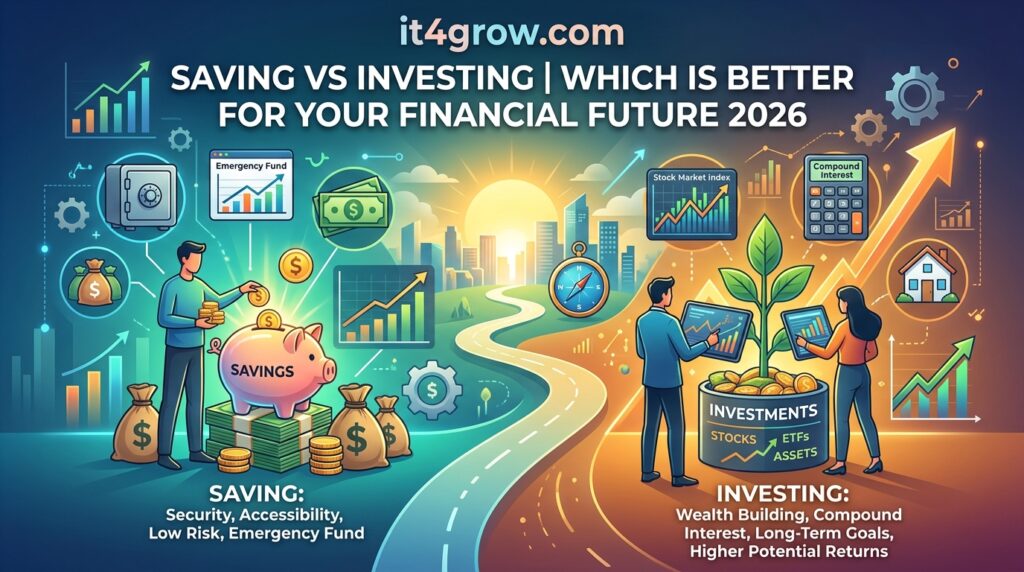
**Save for emergencies and short-term goals.
Invest for long-term growth.
This approach provides security today and growth for tomorrow.
Common Mistakes People Make
- Leaving all funds in low-interest savings accounts.
- Investing without an emergency fund.
- Confusing short-term goals with long-term investments.
Avoiding these mistakes will improve your financial security.
Tips for Starting to Save and Invest Wisely
- Build a basic savings cushion first.
- Learn about stocks, ETFs, and bonds.
- Automate contributions to savings and investments.
- Review and adjust your goals annually.
Frequently Asked Questions 2026:
Q1: Can I save and invest at the same time?
Yes, a portion of your money can be saved for emergencies while the rest is invested for long-term growth.
Q2: Which is better: saving or investing?
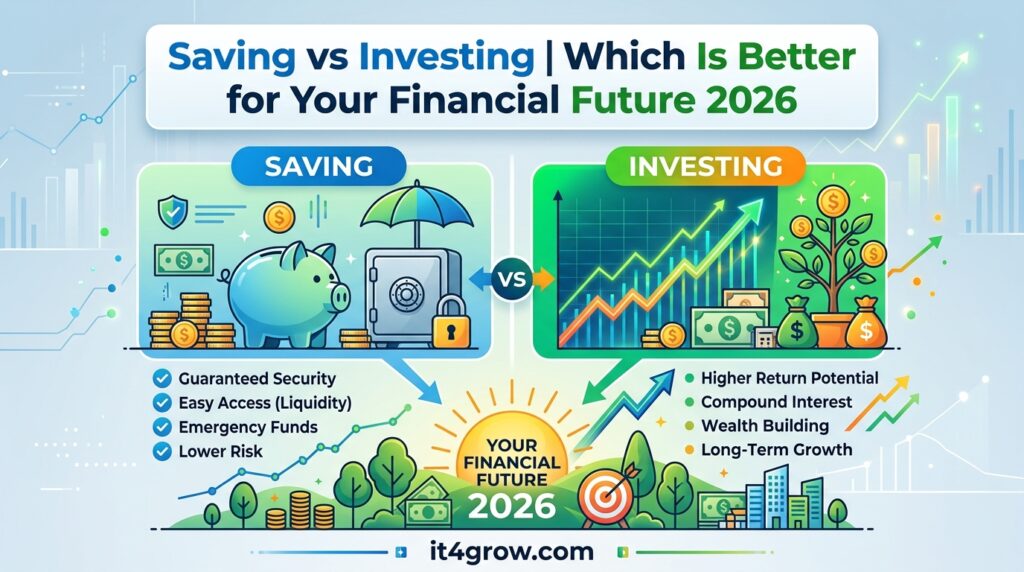
It depends on your goals, risk tolerance, and time horizon.
Q3: Is investing safe?
Investing involves risk, but long-term diversified investments have historically delivered solid returns.
Q4: How much should I save before investing?
Experts recommend saving at least a few months of living expenses before investing.
Q5: What is the downside of saving only?
Money kept in savings alone may not keep up with inflation, reducing its real value over time.